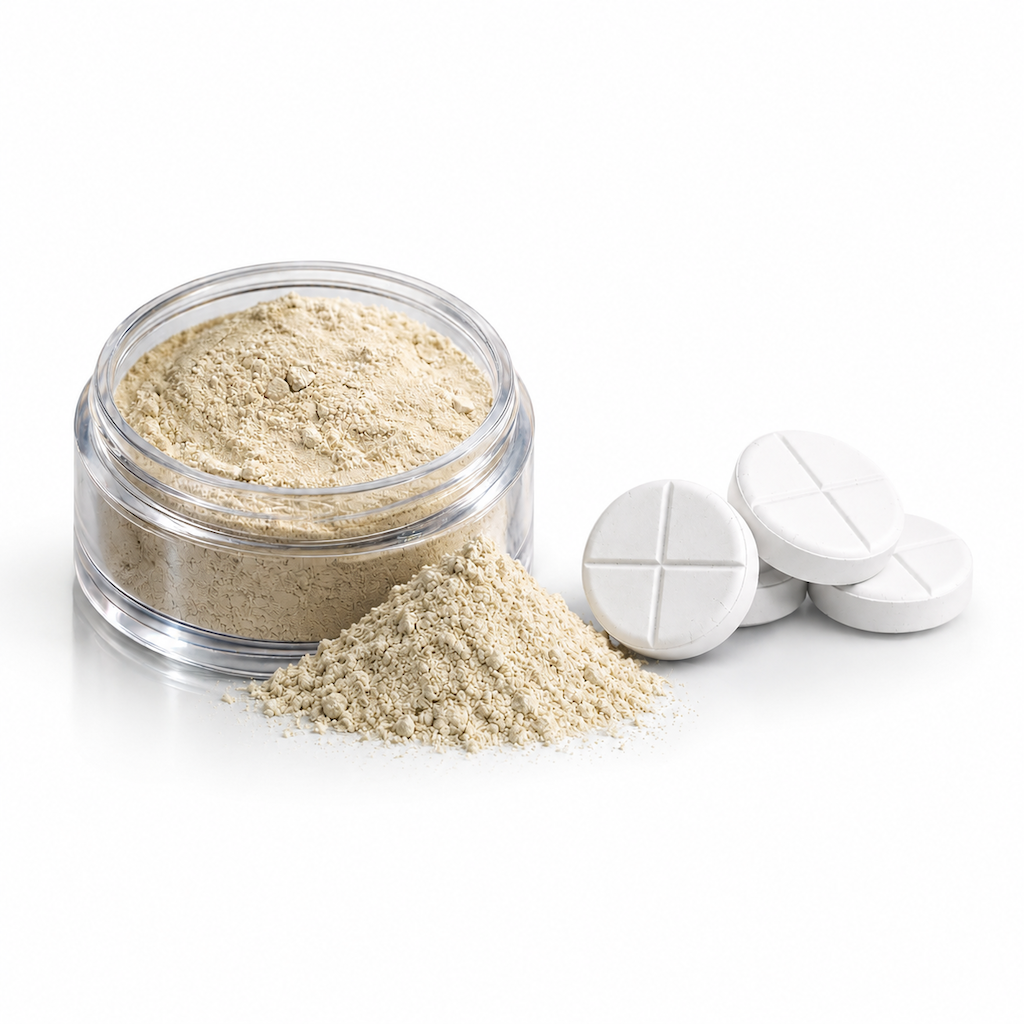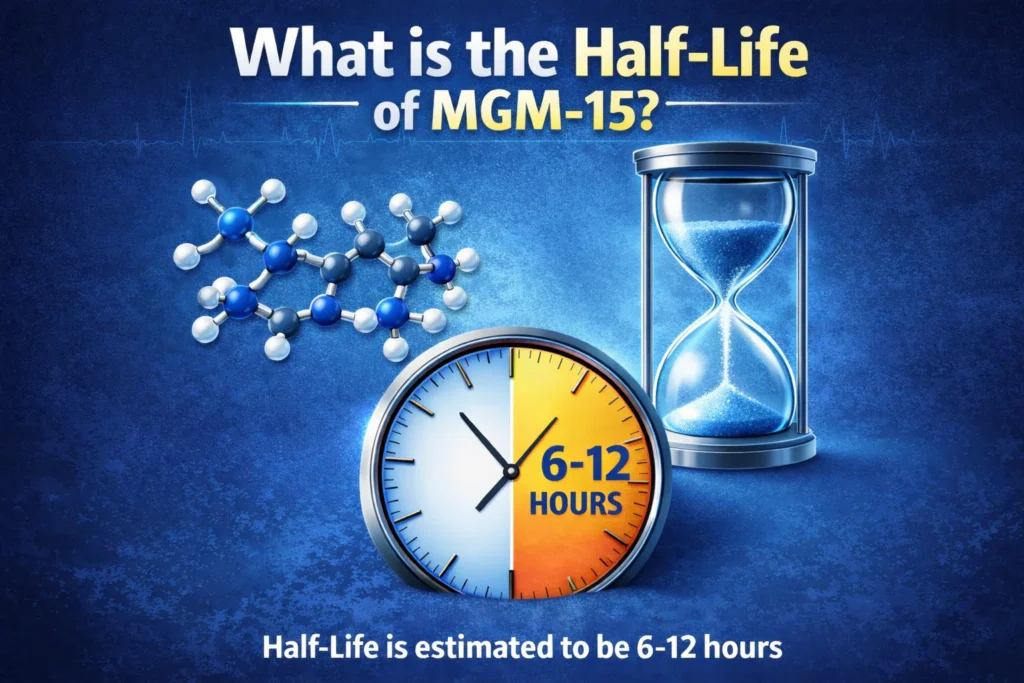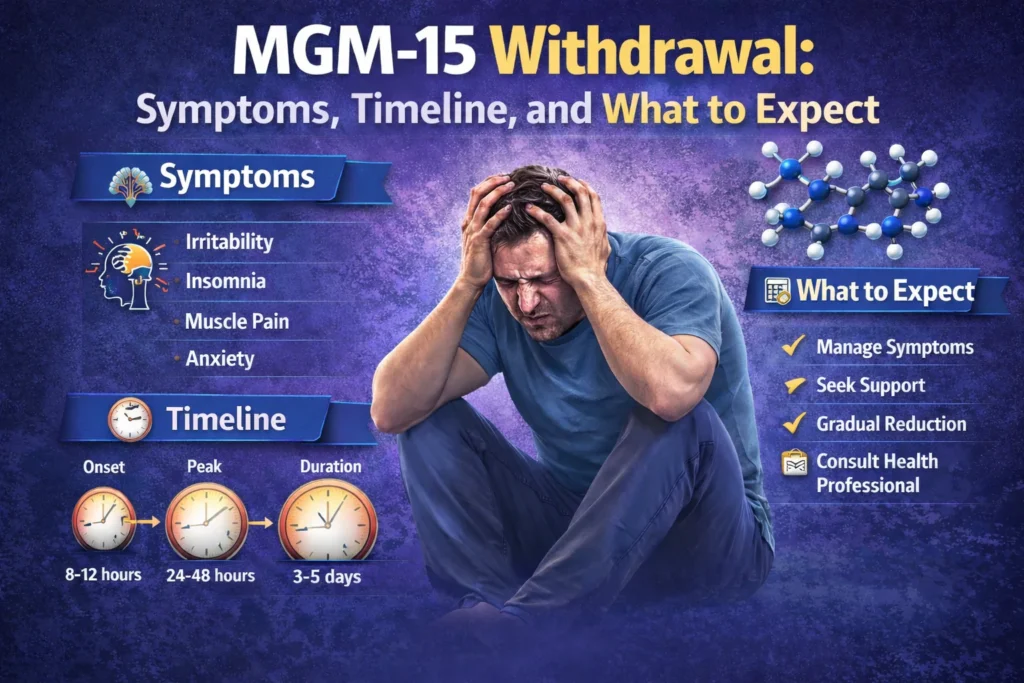
MGM-15 withdrawal occurs when the body adapts to the absence of a compound that altered neurological and metabolic pathways. Symptoms reflect rebound effects in the nervous, gastrointestinal, and hormonal systems after discontinuation. Interested in: MGM-15 Tablet MGM-15 Powder For another safety read, see What is the Half-Life of MGM-15?. TL;DR MGM-15 withdrawal symptoms include nausea, anxiety, insomnia, […]
Author Archives: sales@mgm-15.shop
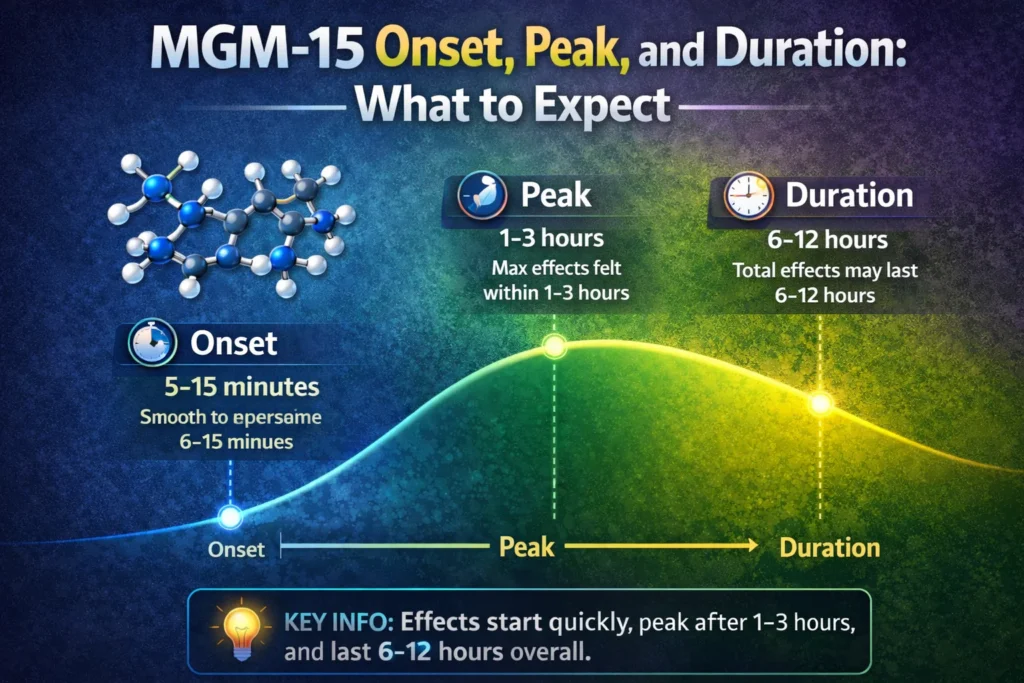
MGM-15 What to Expect Pharmacokinetics depend on absorption rate and metabolism. Onset defines time to first noticeable effect Peak defines maximum pharmacological intensity Duration defines total active effect window MGM-15 shows dose-dependent time variation The next section breaks down onset timing. What is the onset, peak, and duration of MGM-15? MGM-15 onset, peak, and duration […]
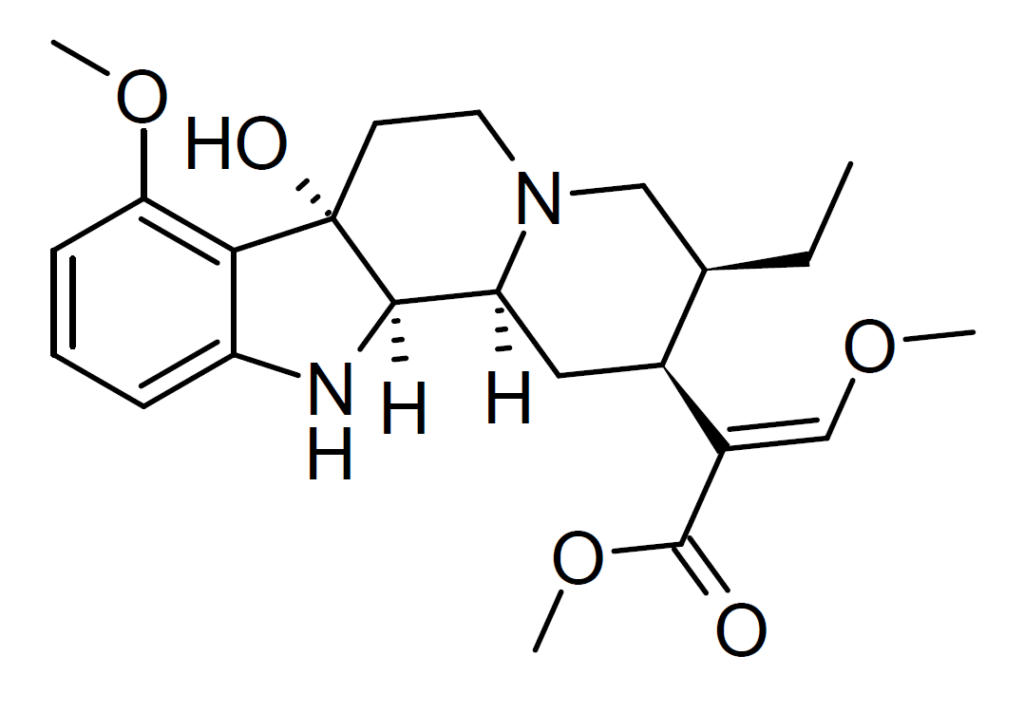
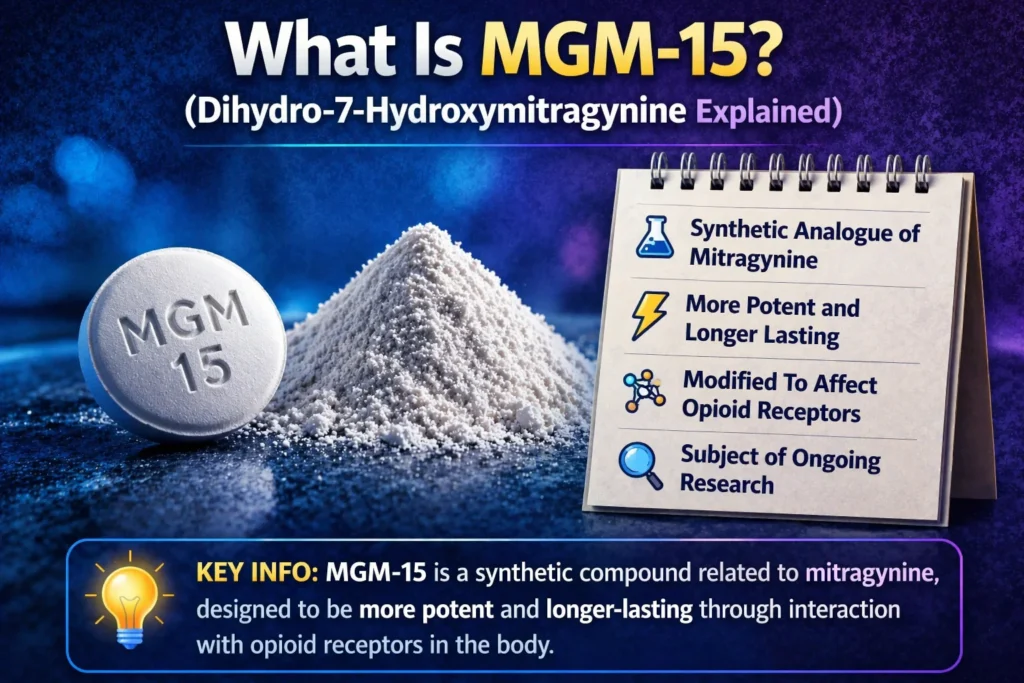
MGM-15 functions as an advanced derivative within the kratom alkaloid family. The modification changes receptor binding strength and pharmacological response. What is MGM-15 and what does MGM-15 mean? MGM-15 is a semi-synthetic alkaloid derived from mitragynine, the primary active compound in Mitragyna speciosa (kratom). MGM-15 refers to dihydro-7-hydroxymitragynine, a structurally modified analog with higher μ-opioid receptor affinity. […]
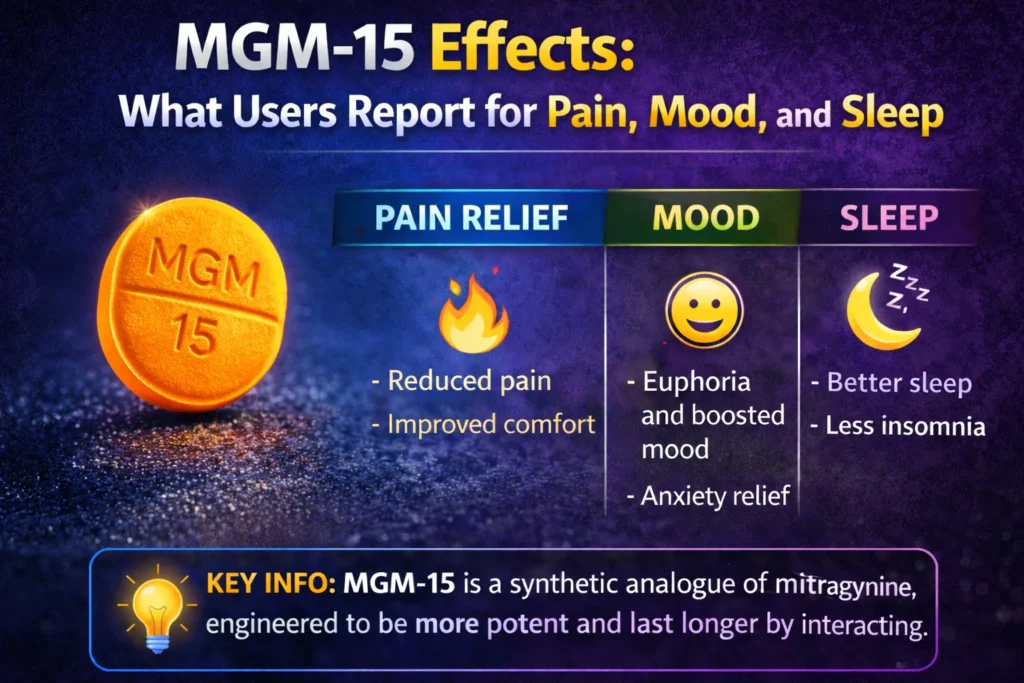
MGM-15 acts on central nervous system pathways. Reported effects align with opioid-like pharmacology but vary by dose and physiology. What are MGM-15 effects? MGM-15 effects include analgesia, sedation, and mood alteration due to μ-opioid receptor activation. Dihydro-7-hydroxymitragynine shows high receptor affinity, which increases effect intensity compared to mitragynine. MGM-15 reduces pain perception → analgesic response […]
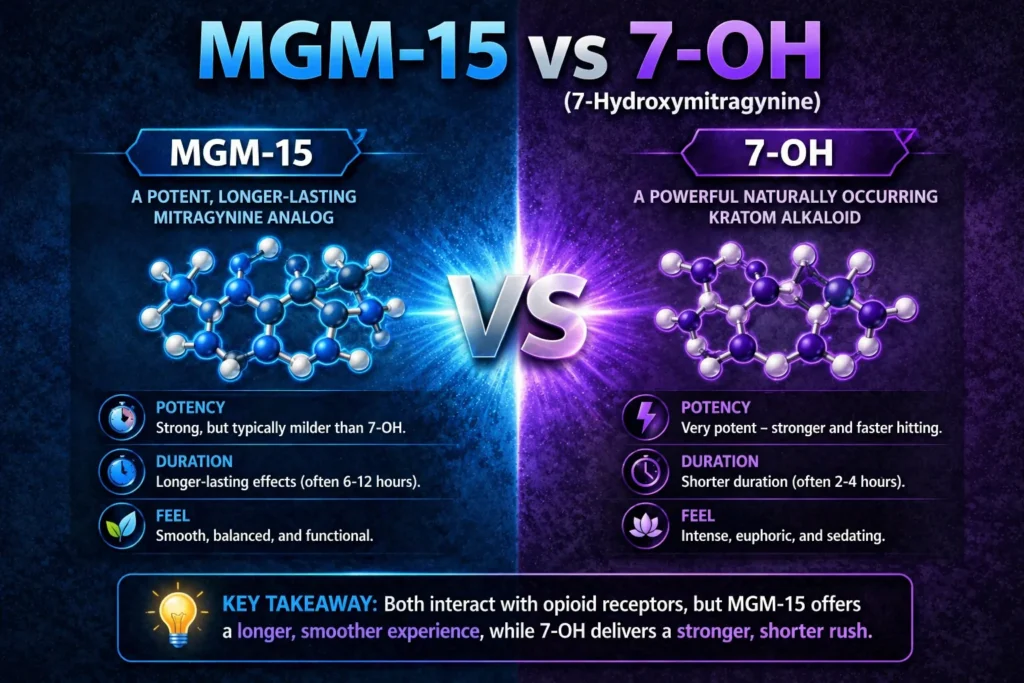
Core distinction: 7-OH forms via oxidation through a natural metabolite MGM-15 forms via hydrogenation → semi-synthetic derivative MGM-15 shows higher μ-opioid receptor affinity → stronger binding 7-OH shows high potency → baseline strong effect This structural difference drives pharmacological variation. The next section explains chemical differences. What is the difference between MGM-15 and 7-OH? MGM-15 […]
Core differences: Kratom leaf contains multiple alkaloids including mitragynine MGM-15 contains a modified derivative of 7-hydroxymitragynine Kratom leaf produces balanced effects due to alkaloid diversity MGM-15 produces stronger, targeted effects due to high receptor affinity This distinction defines potency and pharmacology. The next section explains kratom leaf composition. For another safety read, see Kratom Alkaloid Family […]
Core differences: MGM-15 forms through the hydrogenation of 7-hydroxymitragynine Pseudoindoxyl forms through molecular rearrangement of mitragynine derivatives MGM-15 increases receptor affinity Pseudoindoxyl alters receptor signaling pathways These structural differences define pharmacological outcomes. The next section explains chemical structure. What is the difference between MGM-15 and pseudoindoxyl? MGM-15 differs from pseudoindoxyl because MGM-15 is a hydrogenated […]
MGM-15 is a semi-synthetic, kratom-derived compound discussed heavily in online forums like Reddit due to its opioid-like effects, unclear potency, and rising reports of dependence and withdrawal. Unlike traditional kratom, MGM-15 is more concentrated and pharmacologically active, which makes user experiences harder to standardize and riskier to interpret. Searches such as “MGM-15 Reddit,” “mgm 15 […]
MGM-15 acts on central nervous system pathways. Reported effects align with opioid-like pharmacology but vary by dose and physiology. What are MGM-15 effects? MGM-15 effects include analgesia, sedation, and mood alteration due to μ-opioid receptor activation. Dihydro-7-hydroxymitragynine shows high receptor affinity, which increases effect intensity compared to mitragynine. MGM-15 reduces pain perception → analgesic response […]
MGM-15 and 7-hydroxymitragynine (7-OH) are two of the most talked-about kratom-derived compounds right now, especially as stronger, more concentrated products hit the market. If you’re trying to understand which one is more potent, the answer isn’t just about effects, it comes down to receptor activity, chemical structure, and how each compound behaves in the body. […]